Croatia, coast and islands.
From Istria’s hill towns to Dubrovnik’s walls, with the islands of Dalmatia in between. Choose your region, work out the ferries and time your trip, with the 2026 fares, seasons and entry rules checked against official sources.
A long coast, and islands all along it.
Croatia’s coast runs for hundreds of kilometres down the eastern Adriatic, from the Istrian peninsula near Italy and Slovenia to Dubrovnik near the Montenegrin border. Offshore lie more than a thousand islands, islets and rocks, a few dozen of them inhabited and linked to the mainland by ferry.
Since 1 January 2023 Croatia has used the euro and been part of the Schengen area, so there are no passport checks when you arrive from another Schengen country. Arriving from outside Schengen, or crossing by road to Montenegro or Bosnia and Herzegovina, means a full border check under the EU’s Entry/Exit System.
Several of the country’s UNESCO World Heritage sites are on the coast, including the old city of Dubrovnik, Diocletian’s Palace in Split, the medieval town of Trogir and the Stari Grad Plain on Hvar.
The coast, north to south
Each part of the coast has a different feel. Think about how you will get around, not just the sights.
Istria
A green peninsula with Venetian-era harbour towns such as Rovinj and Poreč, hill villages inland and a food culture close to Italy’s. The sea is rocky, with concrete bathing platforms as well as coves. Pula airport is the gateway, and Trieste and Venice are within driving distance.
Kvarner
The gulf around Rijeka, with the islands of Krk (joined to the mainland by a bridge), Cres, Lošinj and Rab. Popular with drivers from central Europe, and less visited by long-haul travellers than Dalmatia.
Northern Dalmatia
Zadar’s Roman and medieval old town, Šibenik’s UNESCO-listed cathedral, the Kornati archipelago and the waterfalls of Krka National Park inland. Good value compared with the south, and Zadar has its own airport.
Central Dalmatia
Split, built in and around a Roman emperor’s palace, is the country’s main ferry port. From there boats go to Brač, Hvar, Vis, Šolta and Korčula. Trogir is close to the airport, and the Makarska Riviera runs south below the mountains.
Dubrovnik, Pelješac and Mljet
Dubrovnik’s walled old town is the coast’s most famous sight and very busy in summer, especially on cruise-ship days. Nearby are the wine peninsula of Pelješac, the walls of Ston, the green island of Mljet with its national park, and Cavtat. Montenegro’s Bay of Kotor is about two hours away by road.
Arriving in Croatia
Most visitors fly. Choose the airport closest to your first base rather than the cheapest flight to the wrong end of the coast.
| Way in | Best for | Good to know |
|---|---|---|
| Split airport | Split, Trogir, the central islands | The busiest coastal airport in summer. United added a new seasonal Newark–Split route for summer 2026 |
| Dubrovnik airport | Dubrovnik, Cavtat, Pelješac, Montenegro | South-east of the city, towards the Montenegrin border. United also flies Newark–Dubrovnik in summer |
| Zadar, Pula, Rijeka | Northern Dalmatia, Istria, Kvarner | Mostly seasonal and low-cost flights from elsewhere in Europe |
| Zagreb | Year-round flights, then train, bus or car | The capital is inland. Allow about four hours by motorway to Split |
| By ferry from Italy | Drivers from southern Italy | Jadrolinija’s Bari–Dubrovnik and other international sailings are cancelled until 5 January 2027 because of a technical problem with its ship |
| By road from Montenegro | Combining the Bay of Kotor and Dubrovnik | A Schengen external border with full checks and, in summer, long queues |
Ferries, catamarans, buses and cars
The coast is easy without a car if you stay in towns with ferry and bus links. A car helps in Istria, inland and on the larger islands.
Car ferries
Run mainly by the state company Jadrolinija, on routes such as Split–Supetar (Brač), Split–Stari Grad (Hvar) and Orebić–Korčula. Cheap for foot passengers, and you can reserve a car space on some lines.
Catamarans
Fast passenger boats run by Jadrolinija, Krilo and TP Line. The coastal routes linking Split, Hvar, Korčula, Mljet and Dubrovnik ran daily from 1 April to 31 October in 2026.
Coaches
Frequent along the coastal highway and the motorway between Zagreb, Zadar, Split and Dubrovnik. The usual way between Split and Dubrovnik outside the catamaran season.
Driving the coast
The Pelješac Bridge, opened in 2022, lets you drive from Split to Dubrovnik without passing through Bosnia and Herzegovina at Neum. Parking in old towns is limited and expensive in summer.
Rental cars abroad
Taking a Croatian rental car into Montenegro or Albania needs the company’s written permission, usually for a fee. Albania also needs Green Card insurance. Ask before you book.
On the islands
Local buses meet many ferries, for example from Stari Grad’s ferry port to Hvar town. On small islands, walk, cycle or hire a scooter.
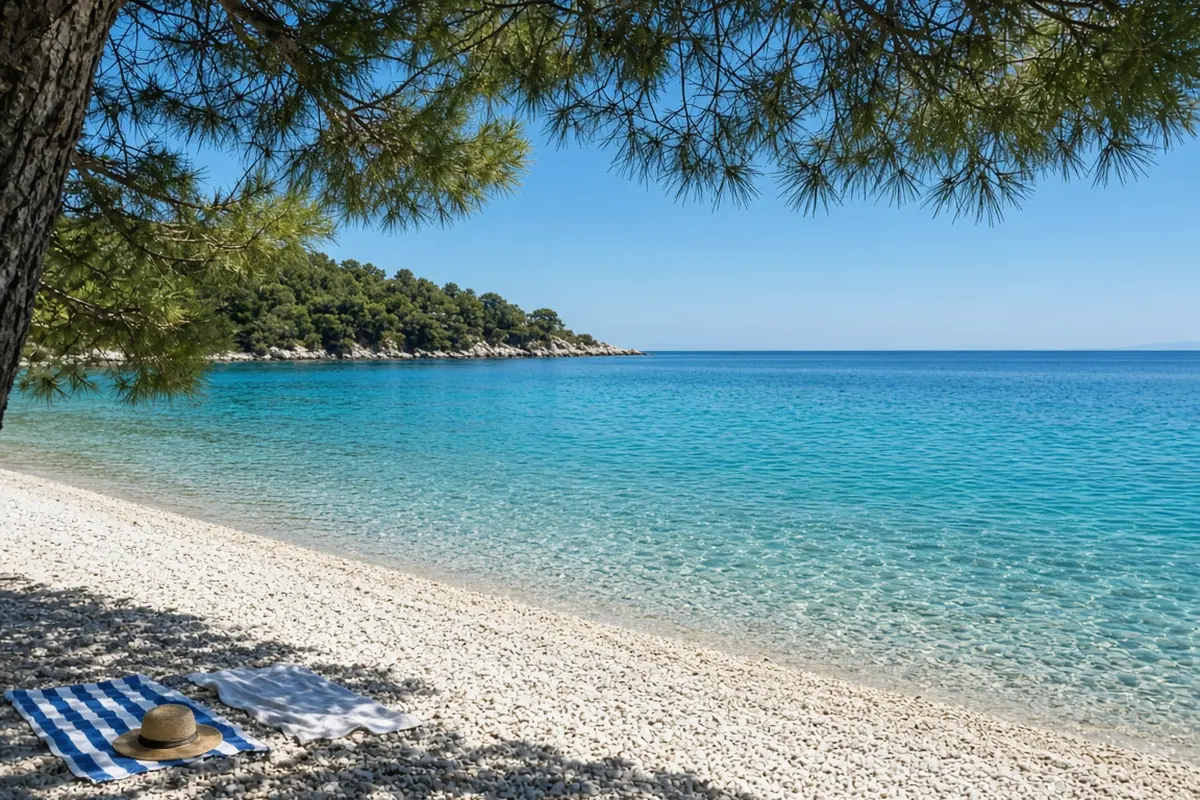
Aim for June or September.
July and August have the warmest sea and every boat running, but also the highest prices, the busiest ferries and long queues at the Montenegrin border. In June and September the sea is warm enough for most people and the crowds are thinner.
May and October are good for walking and old towns. The coastal catamarans still ran in both months in 2026, but fewer boats sailed on many routes and some island hotels opened late or closed early.
From November to March the car ferries keep running on reduced timetables and most coastal towns stay open, but many island businesses close.
Plan your trip, step by step
Practical guides, checked against the 2026 timetables and official sources.
Croatia island hopping
Which boats run where, 2026 fares, the season, and 7, 10 and 14-day routes between Split and Dubrovnik.
Split to Hvar ferry
Catamaran to Hvar town or car ferry to Stari Grad, with times, fares and the bus across the island.
Dubrovnik to Kotor
Crossing into Montenegro by bus, transfer or car, and how to avoid the worst of the summer queues.
Montenegro travel guide
The Bay of Kotor, Budva and the south, for adding a few days across the border.
Rules and costs to know
The details that most often catch visitors out.
Entry/Exit System
Since 10 April 2026 the EU’s EES has been fully running at Schengen external borders. Non-EU visitors have their fingerprints and a photo taken on their first entry. ETIAS is not in operation yet and no applications are being collected, so don’t pay any website that offers one.
Tourist tax
Charged per person per night and set by each town. In 2026 the top rate was €2.65 a night in Split, Trogir and Vis, and €2.00 in Hvar town. Children under 12 don’t pay. It is usually added to your accommodation bill.
Book ferries in summer
Catamaran seats and car spaces on busy lines sell out in July and August. Buy online a few days ahead, and arrive at the port early with a car.
Dress codes in old towns
Several towns, including Split and Hvar, fine people for walking around the centre in swimwear or shirtless. Cover up when you leave the beach.
Questions people ask
Does Croatia use the euro?
Yes. Croatia adopted the euro on 1 January 2023, the same day it joined the Schengen area.
Do I need a visa for Croatia?
US, UK, Canadian and Australian citizens can visit visa-free for short stays in the Schengen area. Since 10 April 2026 non-EU visitors are registered in the EU Entry/Exit System, with fingerprints and a photo, on their first entry. ETIAS is not in operation yet.
Which airport is best for the Croatian islands?
Split, for Brač, Hvar, Vis and Korčula. Dubrovnik suits Mljet, Korčula and the far south. Zadar and Pula serve the northern islands and Istria.
How much is the Dubrovnik city walls ticket?
€40 for adults and €15 for 7 to 18-year-olds for most of the year in 2026, and €20 for adults from December to February, according to the Society of Friends of Dubrovnik Antiquities, which runs the walls. Children under 7 go free.
Can I drive from Split to Dubrovnik without going through Bosnia?
Yes. Since the Pelješac Bridge opened in 2022, the road stays in Croatia and avoids the border crossings at Neum.
Islands, old towns and ferries. Croatia is planned.
Next, work out your boats with our island hopping guide.
Plan your island hopping →Explore another country: the Montenegro travel guide → or the Albanian Riviera guide →