Dubrovnik to Kotor: bus, transfer or drive.
About 90 kilometres and two hours on a quiet day, with a Schengen border in the middle that can add hours in July and August. How each option works, what the Entry/Exit System changed in 2026, what a rental car needs, and when to set off.
The road is short. The border is the variable.
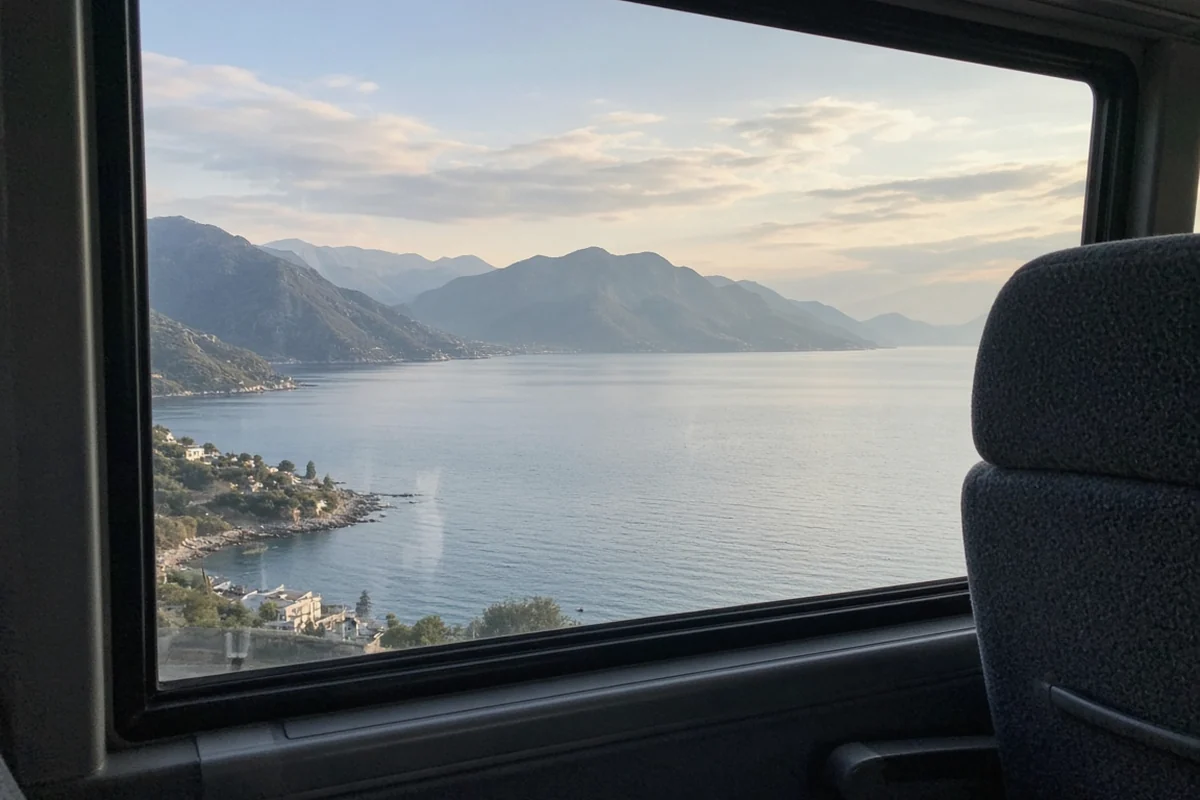
Dubrovnik and Kotor are about 90 kilometres apart by road. The route runs south past Dubrovnik airport and Cavtat to the border, then along the Bay of Kotor via Herceg Novi, either round the bay through Risan and Perast or across the narrows on the Kamenari–Lepetane car ferry.
There are two checkpoints, a few kilometres apart: Karasovići on the Croatian side and Debeli Brijeg on the Montenegrin side. Croatia is in Schengen and Montenegro isn’t, so this is a full external border, and since 10 April 2026 non-EU travellers are registered in the EU’s Entry/Exit System when they cross.
There is no regular ferry between the two, and no railway. You go by road, or on an organised day trip.
The options side by side
Typical 2026 figures. Fares vary by operator and date; border time is the same for everyone.
| Option | Time on a quiet day | Typical cost | Good for | Watch out for |
|---|---|---|---|---|
| Bus | About 2 to 2½ hours | About €15–30 one way | Budget travellers, one-way trips | Everyone gets off twice at the border; hold luggage charged separately on some buses |
| Private transfer | About 2 hours | Per vehicle, so better value for groups | Door to door, early starts, luggage | Same border queue as everyone else |
| Rental car | About 2 hours | Rental plus a cross-border fee | Exploring the bay, Lovćen and Budva | Permission from the rental company; one-way drop-off fees; parking in Kotor |
| Day tour | A long day | Per person | A first look at Kotor and Perast | Little time in Kotor; tours tend to hit the border at the busiest hours |
Karasovići and Debeli Brijeg
The single biggest factor in how long the trip takes.
Summer queues
The two crossings were never built for peak-summer volumes. In early August 2026 the Croatian Automobile Club (HAK) reported waits of up to 12 hours on the worst weekend days, when tens of thousands of people crossed. Midday in July and August is the worst time.
Entry/Exit System
Since 10 April 2026 the EES has been fully running at Schengen external borders. Non-EU visitors give fingerprints and a photo on their first registration, which slows full coaches. If you already registered on arrival at a Croatian airport, later crossings are quicker.
Documents
Bring your passport (EU citizens can use an ID card). US, UK and Canadian citizens don’t need a visa for Montenegro for stays of up to 90 days. ETIAS is not in operation.
Check before you leave
HAK publishes road conditions and border information for the Croatian side. A quick look before you set off can save you hours.
Taking the bus
The cheapest option, and the slowest at the border.
From Dubrovnik’s main bus station
Buses leave from the main bus station at Gruž, next to the ferry port, about 15 minutes by city bus from the old town. Several Croatian and Montenegrin companies, and FlixBus, run the route, with more departures in summer than in winter. Some carry on to Budva.
Fares are usually in the €15 to €30 range one way. Buying online secures a seat, which matters on the early summer buses. Some drivers charge a small cash fee for each bag in the hold.
Take the first bus
In July and August, an early-morning bus is often through both checkpoints in under half an hour; a late-morning one can spend hours there. Evening buses are usually quicker too. From October to May, the border is rarely a problem.
Driving, and what a rental car needs
The most flexible way to see the bay, if your rental agreement allows it.
Cross-border approval
Most Croatian rental companies allow Montenegro only if you ask when booking, usually for a fee, and give you a document for the border. Without it, you may be turned back or uninsured.
Drop-off abroad
Returning a Croatian car in Montenegro is often impossible or very expensive. Most people return to Dubrovnik, or rent a Montenegrin car for the Montenegro part.
Kamenari–Lepetane ferry
A short car ferry across the narrows of the bay saves about 30 km of driving round. A car cost €5 a crossing in 2026; foot passengers travel free. In summer the queue for it can be long too.
Going on to Albania?
Albania needs Green Card insurance and the rental company’s permission as well. Check both before you book.
In Kotor
The old town is car-free. Park outside the walls or at your accommodation, and expect high prices and full car parks on cruise days.
The serpentine road
With a car, the switchback road above Kotor towards Lovćen National Park and Cetinje is one of the great drives of the coast. Allow a full day.
Into the old town
Kotor’s bus station is a short walk from the old town’s main gate. Inside the walls everything is on foot.
The climb up the city walls to the San Giovanni fortress cost €15 in 2026. The ticket booths open 07:00–20:00 from May to September and 08:00–17:00 in October and November. Go early in summer, before the heat and the cruise-ship crowds.
Staying a few nights? Our Montenegro travel guide compares Kotor, Perast, Tivat and the Budva Riviera.
Planning tips
Stay, don’t day-trip
A day trip spends four or more hours on the road in summer. One or two nights on the bay make the journey worthwhile.
Fly in, fly out
Consider flying into Dubrovnik and out of Tivat or Podgorica, or the other way round, so you cross the border only once.
Carry euros
Both countries use the euro. Small notes help for bus luggage fees, the ferry and parking.
Coming from the islands?
The Croatian catamarans end in Dubrovnik. See our island hopping guide for the boats down the coast.
Questions people ask
How long does it take to get from Dubrovnik to Kotor?
About two hours by road on a quiet day for roughly 90 km. In July and August border queues at Karasovići and Debeli Brijeg can add several hours, especially around midday and at weekends.
How much is the bus from Dubrovnik to Kotor?
Usually about €15 to €30 one way, depending on the company and how far ahead you book. Buses leave from Dubrovnik’s main bus station at Gruž.
Can I take a Croatian rental car to Montenegro?
Usually yes, but only with the rental company’s written permission, arranged when you book and usually for a fee. Leaving the car in Montenegro is often not allowed or very expensive.
Do I need to do anything for the EU Entry/Exit System?
Just carry your passport. Since 10 April 2026 non-EU travellers have their fingerprints and a photo taken on their first registration, which can slow the queue. ETIAS is not in operation, so there is nothing to apply for in advance.
Is there a ferry from Dubrovnik to Kotor?
There is no regular scheduled ferry. Some excursion boats and private boats make the trip in summer; otherwise go by road.
Border, bay and old town. Your trip to Kotor is planned.
Next, choose where to stay in Montenegro.
Montenegro travel guide →Or go back to the Croatia travel guide →