Montenegro, mountains meet the sea.
A short coast with a lot packed in: the fjord-like Bay of Kotor, the beaches of the Budva Riviera and the long sands of the south. How to arrive, where to base yourself and the border, ferry and entry rules, checked for 2026.
Small country, big scenery.
Montenegro’s coast is barely 100 kilometres long as the crow flies, from the Croatian border near Herceg Novi to the Albanian border beyond Ulcinj. Behind it, limestone mountains rise steeply, which is what makes the Bay of Kotor so dramatic and the roads so slow.
The country uses the euro but is not in the European Union or the Schengen area. Arriving by road from Dubrovnik means leaving Schengen at a full border check, and coming back means the EU’s Entry/Exit System on the Croatian side. Its statistics office counted about 2.7 million tourist arrivals in 2025.
The Bay of Kotor, with the walled town of Kotor, is a UNESCO World Heritage site, and the reason most visitors come. Budva and its Riviera have the busiest beaches, and the south around Ulcinj is closer to Albania in feel and in prices.
The coast and what’s behind it
Distances are short, but mountain roads and summer traffic make them feel longer. Pick one or two bases.
The Bay of Kotor
A winding, mountain-ringed bay with Kotor’s walled old town at its inner end, the small baroque town of Perast and its two islets, and Tivat with its marina and airport. Herceg Novi sits at the mouth of the bay, nearest Croatia. Beaches are small; the draw is the setting.
The Budva Riviera
Budva’s small walled old town sits beside the country’s busiest stretch of beach, with Bečići, Pržno, Sveti Stefan and Petrovac further south. Lively and built-up in the centre, quieter at the southern end.
Bar and Ulcinj
Bar is a port town with ferries to Italy and the railway to Podgorica. Ulcinj, near the Albanian border, has an old town on a headland and Velika Plaža, a very long sandy beach to the south. Good value, and an easy hop to northern Albania.
Lovćen, Cetinje and Lake Skadar
The serpentine road up from Kotor leads to Lovćen National Park and the old royal capital, Cetinje. To the south-east, Lake Skadar National Park, shared with Albania, has boat trips and wine villages. Durmitor in the north is too far for a day trip from the coast.
Arriving in Montenegro
Two airports of its own, plus Dubrovnik just over the border. Which is best depends on where you are staying.
| Way in | Best for | Good to know |
|---|---|---|
| Tivat airport | The Bay of Kotor and Budva | About 8 km from Kotor. Mostly seasonal European flights; Jet2 and easyJet have announced new UK routes for 2027 |
| Podgorica airport | Bar, Ulcinj, Lake Skadar | The capital’s airport, inland, about 75 km by road from Kotor. Year-round flights |
| Dubrovnik airport (Croatia) | Herceg Novi and the Bay of Kotor | Close to the border, with more long-haul links. You cross a Schengen external border by road |
| By road from Croatia | Combining Dubrovnik and Kotor | Two checks, at Karasovići (Croatia) and Debeli Brijeg (Montenegro). See our Dubrovnik to Kotor guide |
| By road from Albania | Ulcinj and the south | The main coastal crossing is near Lake Skadar, between Ulcinj and Shkodër |
Buses, the bay ferry and driving
There is no railway along the coast. Buses link the towns, and a car makes the inland trips easier.
Coastal buses
Frequent buses run between Herceg Novi, Kotor, Tivat, Budva, Bar and Ulcinj. Kotor’s bus station is a short walk from the old town.
Kamenari–Lepetane ferry
A short car ferry across the narrows of the bay saves the long drive round. In 2026 a car cost €5 a crossing; foot passengers and cyclists cross free.
Driving
Roads are narrow and winding, and the coast road is slow in summer. A Croatian rental car needs the company’s permission to enter Montenegro, usually for a fee.
On the bay
Water taxis and excursion boats run between Kotor, Perast and the bay’s islets in season.
Bar–Podgorica
The country’s only main line runs inland from Bar via Podgorica towards Serbia. Useful for Lake Skadar, not for the coast.
On to Albania
Buses and transfers run from Ulcinj and Podgorica to Shkodër and Tirana. Allow time for the border check.
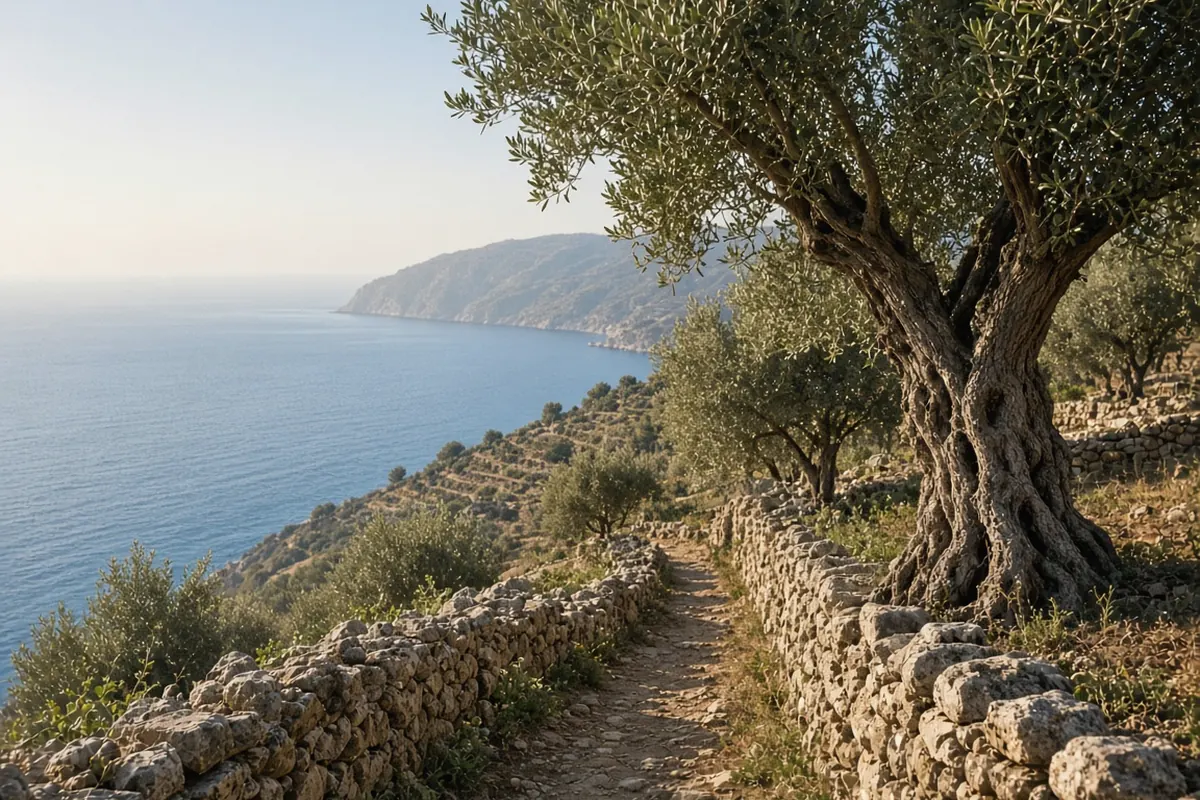
Late spring and early autumn.
July and August are hot and crowded, with traffic jams on the coast road, cruise-ship crowds in Kotor and the longest queues at the Croatian border. Prices peak too.
May, June and September are the best months for most people: the sea is warm from June, and walking up to Kotor’s fortress or into the mountains is more comfortable.
In winter the coast is quiet and mild, many beach businesses close, and the mountains inland get snow.
Rules and costs to know
Short to read, useful at the border and at check-in.
Entry
US, UK and Canadian citizens can visit visa-free for up to 90 days in any 180. Montenegro is outside Schengen, so days here don’t count towards your Schengen allowance.
Registration
Visitors must be registered with the local authorities within 24 hours of arrival. Hotels and licensed rentals do it for you; if you stay privately, check that your host has.
Tourist tax
Set by each municipality and charged per night, typically around €1 per adult (Tivat charged €1 in 2026, with reductions for children). Usually added to your bill.
Border queues
The crossings from Croatia are the slowest part of many trips in summer. Cross before 08:00 or after 16:00, and see our Dubrovnik to Kotor guide.
Questions people ask
Does Montenegro use the euro?
Yes. Montenegro uses the euro, even though it is not a member of the European Union.
Is Montenegro in the Schengen area?
No. Montenegro is outside both the EU and Schengen. Crossing from Croatia means a full border check, and non-EU visitors are registered in the EU Entry/Exit System on the Croatian side.
Which airport is closest to Kotor?
Tivat, about 8 km away. Podgorica is about 75 km by road. Many visitors also fly into Dubrovnik in Croatia and cross the border by road.
How much does it cost to climb Kotor’s city walls?
€15 per person in 2026, according to the Municipality of Kotor. Children under 12 and residents are exempt but still need a free ticket. The booths are staffed from March to November; in winter the climb is open at your own risk.
Can I visit Sveti Stefan?
The island is a private resort for hotel guests; it reopened on 1 July 2026. The beaches on either side of the causeway are open to the public, mostly with paid sunbeds.
Bay, beaches and mountains. Montenegro is planned.
Coming from Croatia? Read how the border crossing really works in summer.
Dubrovnik to Kotor →Explore another country: the Croatia travel guide → or the Albanian Riviera guide →